

Why Is My Water Bill So High? 7 Plumbing Causes
Quick Answer: A high water bill can come from a running toilet, slab leak, sprinkler leak, dripping faucet, water heater leak, service line leak, or unexpected appliance or pool water use. North Texas summer irrigation, household changes, and billing adjustments can also raise your bill. Start by comparing gallons used, then check your water meter before and after two hours with no water use. If the reading changes, you probably have a leak. The seven checks below explain what to look for, how to narrow down the cause, and when to call a plumber.
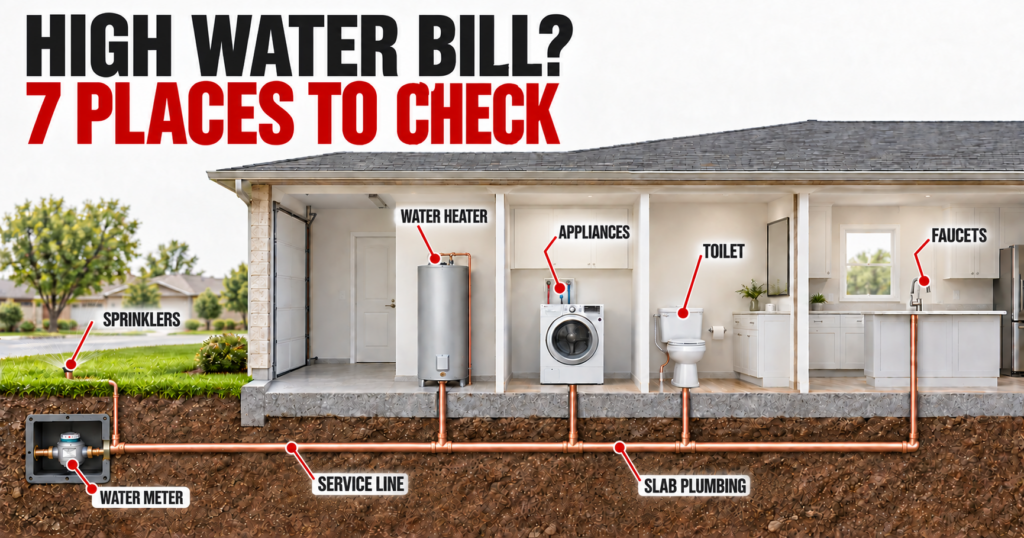
Why Is My Water Bill So High All of a Sudden?
Compare gallons used, billing dates, rates, and estimated-reading corrections. If charges rose but gallons stayed similar, ask your utility why. Compare usage with the same month last year and consider guests, pool filling, or extra irrigation.
Leaks can add up: the average household’s leaks can waste more than 9,300 gallons annually, according to EPA WaterSense Fix a Leak Week.
EPA flags more than 12,000 gallons per month for a family of four during colder months as a possible sign of serious leaks. North Texas summer irrigation can push usage higher, so this winter guide is not a year-round cutoff.
How Do You Check Your Water Meter for a Leak?
Use this test when nobody needs water for two hours.
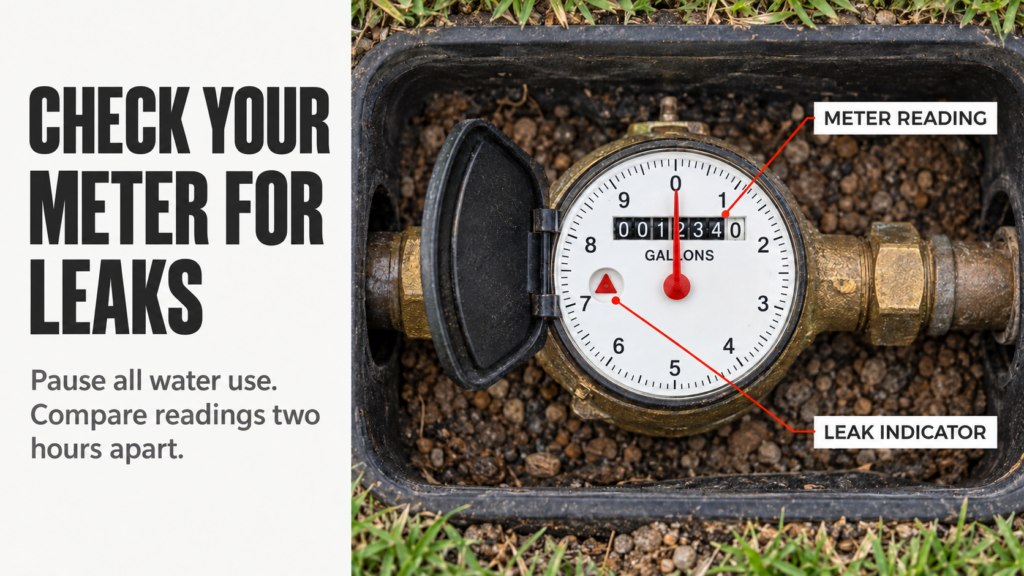
Step 1: Find your water meter
Look near the street or sidewalk. Follow your utility’s meter-reading instructions; ask for help with locked lids or unsafe access.
Step 2: Turn off all indoor and outdoor water use
Stop faucets, appliances, and irrigation. Pause automatic equipment, including softener regeneration and pool autofill. Let toilets finish refilling. Keep the house supply on.
Step 3: Read the meter and the leak indicator
Record the full reading. A moving leak indicator shows current flow; digital symbols vary by meter.
Step 4: Wait two hours and read it again
Use no water for two hours. If the reading changes with no water use, you probably have a leak. Confirm no automatic equipment ran.
Step 5: Narrow down where the leak is
Close the homeowner shutoff only if you can identify and operate it safely. Briefly open a cold faucet to confirm flow stops after pressure drains, then close it. Recheck the meter. Irrigation may have a separate connection and shutoff. Closing the house valve may leave it supplied; turning off the controller does not isolate a leaking line. Do not force valves or operate utility-owned shutoffs. Ask for help if unsure. Restore homeowner valves slowly after testing unless a leak requires the supply to stay off.
What Your Meter Test Tells You
- No movement: A continuous leak is less likely. Check usage changes; intermittent leaks may need another test.
- Movement with everything off: A leak after the meter is probable.
- Stops after house shutoff: Investigate inside the home and other plumbing downstream of that valve.
- Continues moving: Investigate the service line and separately connected irrigation. A shutoff that does not fully close can affect results.
Problem 1: Could a Toilet Be Running?
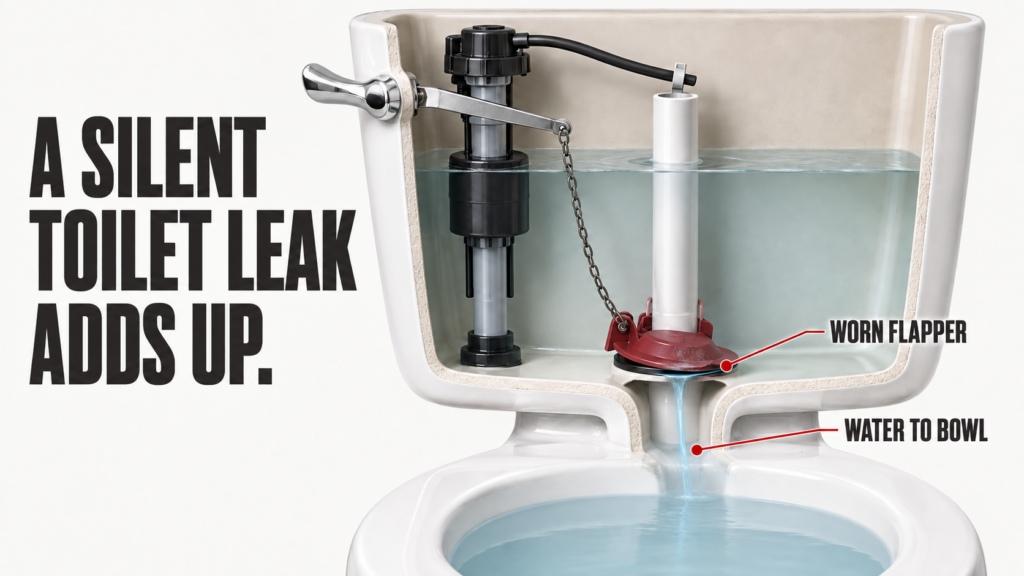
A worn flapper can let water seep into the bowl. A faulty fill valve can send excess water down the overflow tube. Austin Water says a leaky toilet can waste up to 200 gallons daily. The flapper seals the opening at the bottom of the tank. When it does not close properly, water slips into the bowl and the tank refills, even without a flush.
A matching replacement flapper may solve it. Call a plumber for a cracked tank, water at the base, or recurring trouble.
Problem 2: Could It Be a Slab Leak?
A pressurized water line leaking beneath or within the slab can raise your bill before water becomes visible.
Expansive clay swells when wet and shrinks as it dries. North Texas moisture cycles can contribute to foundation movement and plumbing stress, but do not cause every slab leak. Pipe condition and installation also matter. Start with accessible fixtures and appliances before assuming the problem is beneath your foundation.
Watch for warm floor spots, damp flooring, running-water sounds, or unexplained meter movement. These clues need investigation, not an automatic slab-leak diagnosis.
Our slab leak detection service helps locate hidden leaks before repair options are chosen.
Problem 3: Could Sprinklers Be Leaking?
Underground irrigation leaks are easy to miss. A faulty zone valve may let water flow even with the controller off. A changed watering schedule can also explain higher use without a leak, so check both the equipment and its settings. Check for soggy patches, water at the curb, broken heads, or low pressure in a zone. Review the controller for extra start times. Run each zone briefly when local watering rules allow. Have an irrigation professional or plumber investigate unexplained loss before digging.
Problem 4: Are Fixtures Dripping?
Check faucets, showerheads, tub spouts, and outdoor hose bibs, including hose connections during use. Small drips add up, as the water-loss table below shows. A worn washer, cartridge, or O-ring may be repairable. Recurring drips or moisture inside cabinets or walls deserve a plumber’s attention.
Problem 5: Is the Water Heater Leaking?
From a safe, accessible spot, inspect the tank, connections, drain pan, and temperature and pressure relief valve’s discharge pipe. Water escaping from a tank, drain valve, or connection can increase metered use. A heater tucked away in a garage or attic may leak unnoticed; poor heating efficiency alone does not establish a water leak.
The T&P valve releases water when temperature or pressure exceeds its limit. Repeated discharge needs professional evaluation. Never cap or plug the valve or pipe.
Problem 6: Is the Service Line Leaking?
The service line carries water from the meter to your house. Suspect it when the yard stays wet along that route or the meter continues moving with house and separate irrigation shutoffs closed. Other clues include bubbling water near the meter or sidewalk and lower pressure throughout the house. These signs help guide an inspection but do not identify the exact leak location.
A valve that does not seal can produce similar results. Have the leak located and ask your utility to confirm the ownership boundary before repairs.
Problem 7: Is an Appliance or Pool Using Water Unexpectedly?
A softener stuck in regeneration, refrigerator supply leak, or faulty washer fill valve can waste water. Listen for unexplained flow and inspect accessible hoses and connections. Some wasted water goes straight to a drain, so a dry floor does not rule out an appliance problem.
A leaking pool may look normal because its autofill continually replaces lost water. A faulty fill valve can also cause overflow.
Ask a pool professional to compare water loss with evaporation using a bucket test with autofill paused.
What Should I Check Next?
Use these observations to choose your next check. They narrow the search without proving a diagnosis.
Homeowner observations, next checks, and possible causes
| What you notice | Check next | Possible causes | When to get help |
|---|---|---|---|
| Bill rose; gallons did not | Rates, fees, billing dates, and adjustments | Billing change rather than added water use | Ask the utility to explain charges |
| High use; meter still during test | Watering schedule, pool fill, automatic cycles | Extra use or an intermittent leak | Repeat test; seek help if unexplained |
| Toilet refills without a flush | Dye-test the tank; inspect flapper and overflow | Worn seal or fill-valve problem | Leak persists or tank/base is wet |
| Meter stops at house shutoff | Fixtures, heater, and appliances downstream | Fixture, appliance, or hidden supply leak | No visible source or damp/warm floor |
| Meter moves with house shut off | Separate irrigation valve and shutoff condition | Service line, irrigation, or valve not sealing | Have the supply layout and leak checked |
| Wet cabinet, heater pan, or yard | Inspect accessible connections and source | Supply, fixture, heater, or buried-line leak | Active damage, T&P discharge, or pressure loss |
| Softener drains or pool keeps filling | Automatic cycles, fill valve, and pool water loss | Stuck cycle, faulty fill valve, or pool leak | Appliance or pool professional as needed |
How much water common leaks waste
| Leak | Water Wasted | Source |
|---|---|---|
| Leaky toilet | Up to 200 gallons per day | Austin Water |
| Irrigation leak 1/32 inch in diameter | About 6,300 gallons per month | U.S. EPA |
| Faucet dripping once per second | More than 3,000 gallons per year | U.S. EPA |
| Showerhead leaking 10 drips per minute | More than 500 gallons per year | U.S. EPA |
| Average household leaks combined | Can exceed 9,300 gallons per year | U.S. EPA |
When Should I Call a Plumber?
Get help for unexplained meter movement, warm or damp floors, running-water sounds, water-heater discharge, or a wet service-line route. Seek prompt help for active damage or sudden pressure loss. For flooding, close the homeowner shutoff if safely accessible and call for help. Avoid standing water near electrical equipment.
Plumbing Dynamics uses non-commissioned technicians. Learn more about our family-owned team.
What Happens After Repairs?
Save your invoice and ask your utility about bill relief. The Dallas Water Utilities Leak Adjustment Program may reduce eligible excess water charges, but does not reimburse repairs. Dallas asks for requests within 90 days of repair. Qualifying adjustments cover up to three months, with one adjustment per 12 months. Approval is not guaranteed.
Other utilities set their own rules. Keep repair records and compare subsequent usage with your normal pattern.
Frequently Asked Questions About High Water Bills
Can a high bill mean something besides a leak?
Yes. Extra watering, guests, pool filling, rate changes, or billing corrections may explain it. Start with gallons used.
Does meter movement prove a leak?
If the reading changes during two hours with no water use, a leak is probable. First rule out automatic equipment.
Does a warm floor prove a slab leak?
No. Warm or damp flooring is a clue; professional testing is needed to confirm and locate a leak.
How much can a running toilet cost?
The cost depends on your rates and how long it leaks. A dye test can reveal silent tank-to-bowl loss.
Can irrigation leak with the controller off?
Yes. A leaking pipe or valve can remain supplied, including through a connection separate from the house shutoff.
Who repairs the line after the meter?
It is commonly the property owner’s responsibility. Confirm the boundary with your utility before arranging repairs.
Will Dallas adjust my bill after repairs?
Possibly. Eligibility rules, documentation, and deadlines apply. Repairing a leak does not guarantee approval.
Why does usage rise in summer?
Irrigation and pool refilling can increase North Texas summer use. Compare the same month last year and review watering schedules.
Final Thoughts
A high water bill deserves a closer look, but it does not automatically mean a major plumbing repair. Comparing actual water use, checking the meter, and inspecting accessible fixtures can help separate everyday usage changes from a leak that needs attention. Start with what you can safely observe, and use those clues to decide your next step.
If the meter keeps moving with everything off, or the source remains hidden, you do not have to keep guessing. Save your recent bills, note the meter readings, and write down any damp spots, unusual sounds, or fixtures that refill on their own. Sharing those details gives a plumber a useful starting point for the inspection.
Still wondering what is driving your water bill up? Plumbing Dynamics helps homeowners in Carrollton and North Dallas investigate hidden plumbing leaks. Call 214-929-3431 or request service online to schedule an inspection and discuss the next steps for your home.