

Before the First Freeze: Which Pipes Need Protection in North Texas?
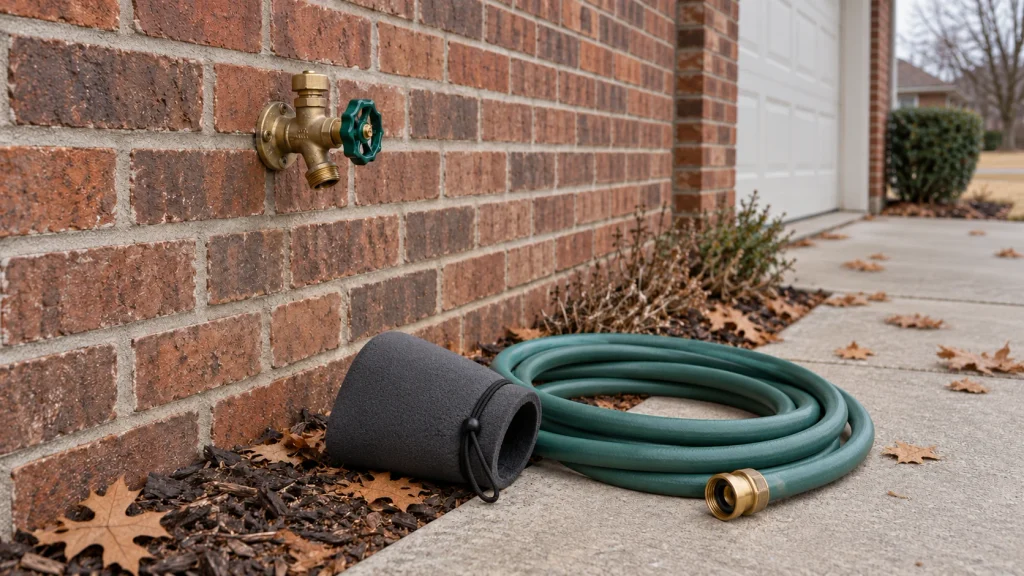
Quick answer: To protect pipes from freezing, start where your home’s heat does not reach: outdoor faucets, garage water lines, and pipes in exterior walls, attics, or crawlspaces. Walk those areas before a freeze, disconnect hoses, check accessible pipe insulation, and find your homeowner shutoff. Then follow your water provider’s precautions when freezing weather is forecast.
Picture the first freeze warning of the season. You turn up the heat, bring the plants inside, and close the garage. The house feels ready. But the hose you used last weekend is still attached out back, and you have not checked the water line along the garage wall. That is where a simple walk around your Carrollton or North Dallas home helps. Start at the outdoor faucets, move into the garage, and look beneath sinks on outside walls. You are looking for what the thermostat cannot tell you: which pipes are exposed, what protection is already there, and what needs attention before the temperature drops.
Which pipes in a North Texas home are most likely to freeze?
Outdoor faucets, pipes in unheated spaces, and poorly insulated exterior walls are common freeze trouble spots. In Carrollton and North Dallas homes, check these locations first:
- Outdoor faucets, especially with a hose still attached.
- Garage lines, including pipes around the water heater.
- Exterior-wall cabinets under kitchen and bathroom sinks.
- Under pier-and-beam homes, where supply pipes sit in moving air.
- Attics and other unheated spaces the heat doesn’t reach.
The temperature around the pipe, air movement, insulation, and length of the cold spell all affect the risk. A drafty crawlspace can freeze while the plumbing in a heated room stays protected.
How to protect pipes from freezing before cold weather
Prepare while you have time to identify exposed lines and address existing leaks. Waiting until a freeze is forecast can leave you trying to find supplies or repair a stuck valve at the last minute.
Take hoses off every outdoor faucet, including frost-free ones
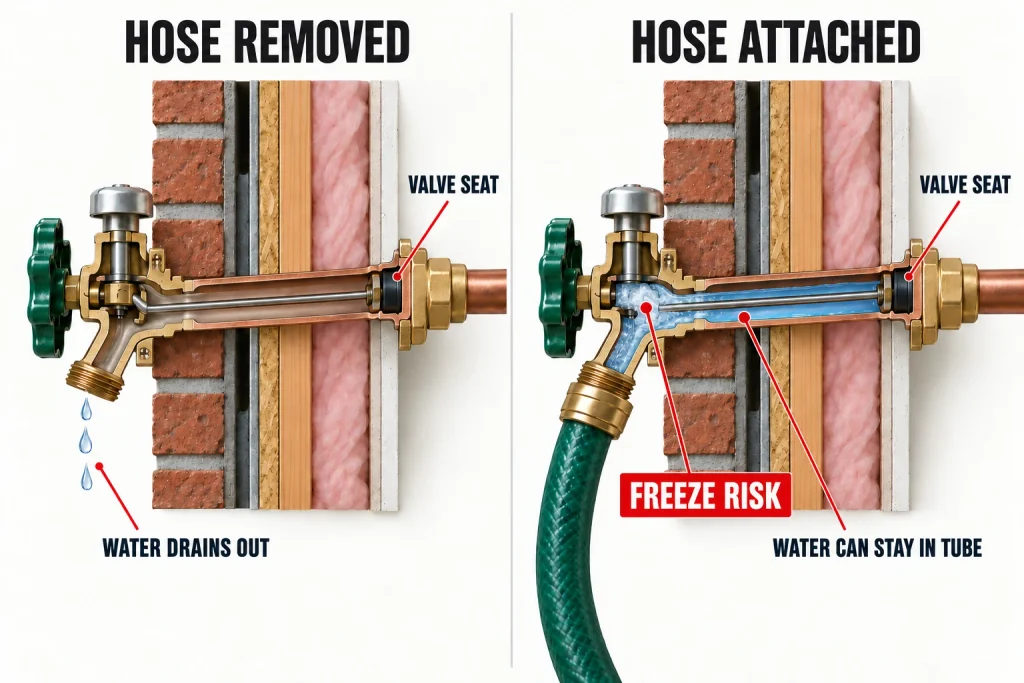
A properly installed frost-free faucet has its shutoff on the warm side of the wall and slopes toward the spout so its tube drains after use. An attached hose or blocked outlet can trap water that freezes and damages the tube. Removing the hose cannot correct an incorrectly pitched faucet.
Disconnect, drain, and store hoses. Add a suitable insulated faucet cover. If a standard outdoor faucet has a dedicated indoor shutoff, follow its winterizing instructions: close the supply valve and open the outdoor faucet to drain. A few drops after shutting off a frost-free faucet may be normal drainage. Persistent dripping or a leak around the handle needs attention before winter. Our outdoor faucet repair or replacement page explains how the fixture’s condition helps determine which option makes sense.
Insulate exposed pipes, and know the limits
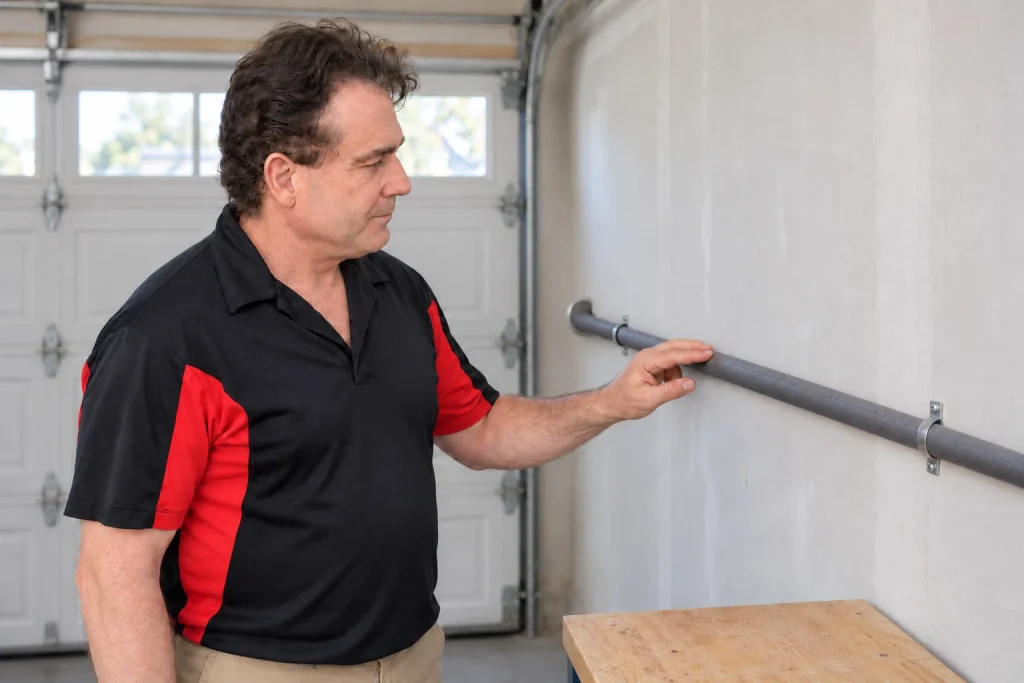
Fit purpose-made insulation to safely accessible hot and cold supply lines in unheated areas. Use the correct size, close seams, and follow the insulation manufacturer’s instructions.
Insulation slows heat loss; it does not produce heat. A pipe can still freeze during prolonged cold, especially where drafts reach it. Repeated freezing deserves an assessment of the pipe location and surrounding insulation.
In the garage, keep insulation clear of the water heater vent
Keep combustible foam away from a gas water heater’s draft hood and metal vent. The Standard Work Specifications for pipe insulation call for at least 6 inches between combustible insulation and a fuel-fired water heater’s draft hood or single-wall metal vent. Other vent types and equipment have their own requirements.
Follow the heater, vent, and insulation instructions, including any larger required clearance. Leave the relief valve, discharge outlet, controls, and air openings unobstructed. If the required gap is unclear, have a plumber check before adding insulation. Never modify gas piping or venting.
Check exposed pipes beneath pier-and-beam homes
Exposed supply lines beneath a raised floor can lose heat quickly. Dallas Water Utilities recommends covering foundation vents before a freeze. Have a professional confirm which vents can be covered safely; never block an appliance exhaust or a required combustion-air opening.
Look only from a safe access opening for bare pipe or loose insulation. Leave tight, wet, electrically hazardous, or otherwise unsafe crawlspaces to a qualified professional. You do not need to crawl under the house to decide help is needed.
Find your private shutoff valve now
Find the homeowner shutoff and keep access clear. Locations vary: some are near an outside faucet or irrigation valves, and older valves may be buried. If you cannot identify yours, have a plumber locate it and show you how to use it before you need it.
Do not force a stuck valve or operate the utility-owned valve at the meter. Contact your water provider for utility assistance. Dallas residents can call 311 for help turning water off; residents of other cities should use their own provider’s contact information.
Pipe freeze protection by location
| Location | What to check | Homeowner action | When to call |
|---|---|---|---|
| Outdoor faucet | Hose and persistent leaks | Remove hose; fit a cover | Leaks or indoor moisture during use |
| Garage | Bare water lines | Insulate with required vent clearance; close door | Clearance or pipe condition is unclear |
| Exterior-wall sink | Exposed supply pipes | Open cabinets during freezing weather; secure chemicals | Leaks or recurring loss of flow |
| Pier-and-beam home | Bare pipe visible from access | Inspect from outside; confirm safe vent protection | Unsafe access or missing insulation |
| Attic | Lines beyond heated rooms | Insulate only safely accessible pipe | Unstable access or concealed lines |
| Homeowner shutoff | Location and safe operation | Identify it; keep access clear | Valve is unfamiliar, buried, or stuck |
What should you do when a hard freeze is forecast?
When freezing weather threatens exposed pipes, help indoor warmth reach the plumbing and follow your water provider’s precautions. Pay particular attention to any line that has frozen before.
- Open cabinets on exterior walls. First, move cleaners and household chemicals out of reach of children and pets.
- Drip faucets supplied by at-risk lines. Dallas Water Utilities recommends a slow drip from both hot and cold during a hard freeze. With two handles, open each slightly. For a single-handle faucet, follow its instructions or ask a plumber how to draw from both supplies; do not assume the center position always does so. Keep the drain open and clear.
- Keep the garage door closed when water lines or a water heater share the space.
- Keep indoor heat steady day and night. A closed cabinet or unheated garage can still be much colder than the room containing the thermostat.
What changes if the power goes out?
If your heating system stops, the warmth protecting indoor pipes can fade as the house cools. Open cabinet doors cannot supply heat that is no longer there, and electric heat cable needs power to work. Do not assume a dripping faucet will protect every line through a prolonged outage.
Follow local emergency guidance and move to a heated location if you cannot stay warm safely. Never use a gas oven to heat the house or run a generator indoors or in a garage. If you must leave, follow the shutoff and winterizing plan for your home, including instructions for the water heater and other connected equipment. Closing the supply does not drain every pipe. If you do not know the safe procedure, contact your plumber or water provider for guidance.
What should you do if water stops flowing or a pipe starts leaking?
Reduced flow during freezing weather may mean ice in a pipe, but it is not proof. Check other faucets and utility outage notices. An active leak needs a different response from suspected freezing without visible leakage.
If a faucet only trickles or stops
If you suspect a frozen pipe, leave the affected faucet open and contact a plumber if you cannot safely locate the frozen section. On an accessible, visibly intact pipe in a dry area, the Red Cross describes gentle warming with warm towels or a hair dryer. Keep electrical devices away from water and do not leave warming equipment unattended.
Never use an open flame or fuel-burning heater. If you see damage or water begins leaking, stop and close the homeowner shutoff if safe. Hidden or inaccessible frozen sections need professional attention.
If water is leaking
Shut off the water at your private valve if you can reach it safely. Stay out of standing water near outlets or electrical equipment, and don’t force a stuck valve. Then call a plumber. Our emergency plumbing repair page covers what to do while you wait.
After the cold passes
A damaged frost-free faucet may leak inside the wall only when it is used again. Watch for indoor moisture near outdoor faucets and beneath sinks. If a hidden leak is suspected, leak detection and repair can help identify its location before repair access is planned.
When is a plumber’s evaluation worth it before freezing weather?
Arrange an evaluation if an outdoor faucet keeps leaking, the shutoff will not turn, exposed lines are beyond safe reach, or the same pipe has frozen before. Explain where the problem occurs and whether it happens only during cold weather. Those details help guide the assessment.
A recurring freeze problem deserves an explanation of the pipe’s exposure, insulation, and access before you approve a repair. At Plumbing Dynamics, our technicians do not work on commission. We evaluate the actual conditions and provide a free estimate with onsite pricing, so you can understand what the recommended work addresses.
Frequently Asked Questions
At what temperature do pipes freeze in North Texas?
Water freezes at 32°F, but an outdoor reading alone does not tell you when water inside a particular pipe will freeze. Pipe location, heat, airflow, insulation, and the duration of the cold all affect the risk. Prepare exposed plumbing before temperatures drop.
Does a frost-free outdoor faucet still need a cover?
A cover adds protection, but it does not replace disconnecting the hose or correct faulty installation. Frost-free faucets must be able to drain and keep their shutoff end protected from freezing. Follow the faucet manufacturer’s winterizing instructions.
Can I use heat tape on exposed pipes?
Only use a listed pipe-heating product suitable for your pipe material and installation. Follow its electrical, insulation, and placement instructions exactly. Do not improvise or overlap cable unless the instructions allow it. Ask a qualified professional if you are unsure.
Should I turn off my water if I’m leaving town during a freeze?
Arrange a winterizing plan before leaving. Dallas guidance recommends closing the private shutoff and draining outdoor faucets for a home left empty several days. Closing the supply alone does not empty all pipes. Ask how shutoff affects your water heater and other water-fed equipment, and do not disable a fire-sprinkler supply. Keep home heat on; the Red Cross recommends at least 55°F while away.
Prepare the exposed pipes first
Take the hoses off, check the exposed lines, and make sure you know where the water shuts off. When freezing weather is forecast, follow the precautions that fit your home. A pipe that froze last winter deserves attention before it happens again.
Plumbing Dynamics is a family-owned, woman-owned company serving Carrollton and North Dallas. Have a leaking outdoor faucet, a pipe that keeps freezing, or a shutoff you cannot turn? Visit our website or call us at 214-929-3431.
