

Buying a North Dallas Home? When You Need a Plumbing Inspection
Quick Answer: A separate plumbing inspection when buying a home in North Dallas can help clarify concerns about leaks, drainage, or past repairs before your inspection deadline. Start by comparing the standard home inspection report with the seller’s repair records, paying attention to flagged problems and areas the inspector could not examine. Updated bathrooms alone don’t establish the condition of buried pipes. Choose follow-up checks based on those findings so you can better understand potential repairs, likely costs, and your next steps before closing.
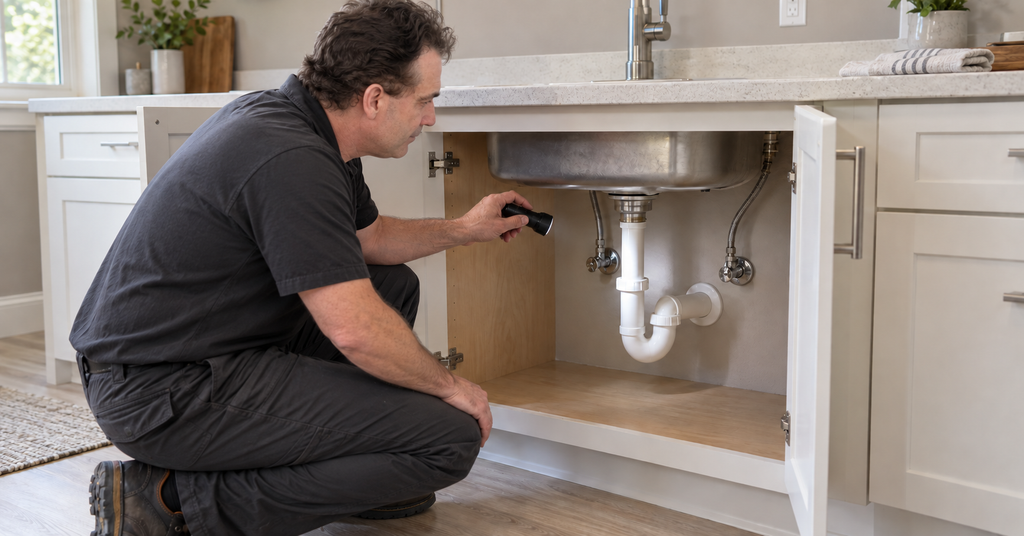
What Does a Texas Home Inspection Cover for Plumbing?
A Texas home inspection is a limited visual survey and basic performance check of the plumbing a licensed inspector can safely reach on inspection day.
Under the TREC Standards of Practice, inspectors report visible pipe materials, static water pressure, and the locations of the water meter and main shutoff. They check fixture flow and drainage and report deficiencies such as active leaks and pressure above 80 psi. Water heaters and accessible gas-system components are also covered.
These are minimum requirements. Some inspectors offer additional services, so confirm what your inspection agreement includes.
What a Home Inspection Is Not Required to Check
The minimum inspection does not require examining buried or concealed pipes, operating shutoff valves, or using a sewer camera. It also does not establish remaining pipe life or certify code compliance.
In a home built on a concrete slab, buried drain lines may remain unexamined even when fixtures drain during the visit. Read the report’s limitations as carefully as its findings.
When Should You Bring In a Plumber?
Ask for a focused evaluation when you need a diagnosis, clearer scope, or repair estimate. If your contract includes an option period, confirm the deadline with your agent and arrange follow-up early.
These findings are worth a closer look:
- Active leaks or unexplained water stains. Ask whether moisture is current and whether plumbing is the source. A stain alone does not identify the cause.
- Older or uncertain pipe materials. If the report identifies cast iron, galvanized steel, or polybutylene, ask about condition, repair history, and how much original piping remains. Material alone does not prove the whole system needs replacement.
- Several slow drains, recurring backups, or sewer odors. These warrant investigation. Multiple affected fixtures can suggest a shared drain problem, but symptoms alone do not locate it.
- Foundation movement or past foundation repair. North Texas clay can expand and contract as moisture changes, contributing to foundation movement. Ask for repair records and any plumbing tests; foundation repairs do not automatically mean the pipes leak.
- Gas-system deficiencies. Arrange appropriate professional follow-up. If you smell gas now, leave immediately and call the gas utility’s emergency line or 911 from a safe location. Do not wait for a scheduled inspection.
- Water pressure above 80 psi. Ask a plumber to assess pressure regulation and any recommended correction.
A dripping faucet may need only a repair estimate. A loose toilet deserves evaluation because the problem may involve its mounting or seal. Neither finding automatically calls for whole-house testing.
Which plumbing check answers which question?
| Check | Useful for | Important limit |
|---|---|---|
| Standard home inspection | Accessible plumbing and basic performance | Does not examine every concealed pipe |
| Focused plumber evaluation | Investigating concerns and discussing repair options | Scope and access determine what can be assessed |
| Sewer camera inspection | Viewing reachable drain and sewer interiors | Does not test water-supply pipes or prove watertightness |
| Drain hydrostatic test | Checking water retention in isolated drain piping | Requires a licensed plumber and seller authorization under the TREC resale contract; does not pinpoint a leak |
What Can a Sewer Camera Show Before You Buy?
A sewer camera can reveal roots, cracks, displaced joints, buildup, and standing water in the drain sections it reaches. It cannot establish the condition of every pipe or guarantee that a drain is watertight.
Through a cleanout or other suitable access, Plumbing Dynamics uses plumbing video camera inspection to investigate sewer-line conditions. For a buyer, useful findings explain what was inspected, what was found, and whether more evaluation or a repair estimate is needed.
Know its limits:
- Reach. Blockages or limited access may prevent a complete inspection.
- Visibility. Standing water and debris can obscure defects.
- Coverage. The camera shows the interior of reached drain sections, not surrounding soil or remaining pipe life.
- Separate systems. A sewer camera does not test pressurized water-supply pipes. A suspected supply leak beneath the home may call for slab leak detection instead.
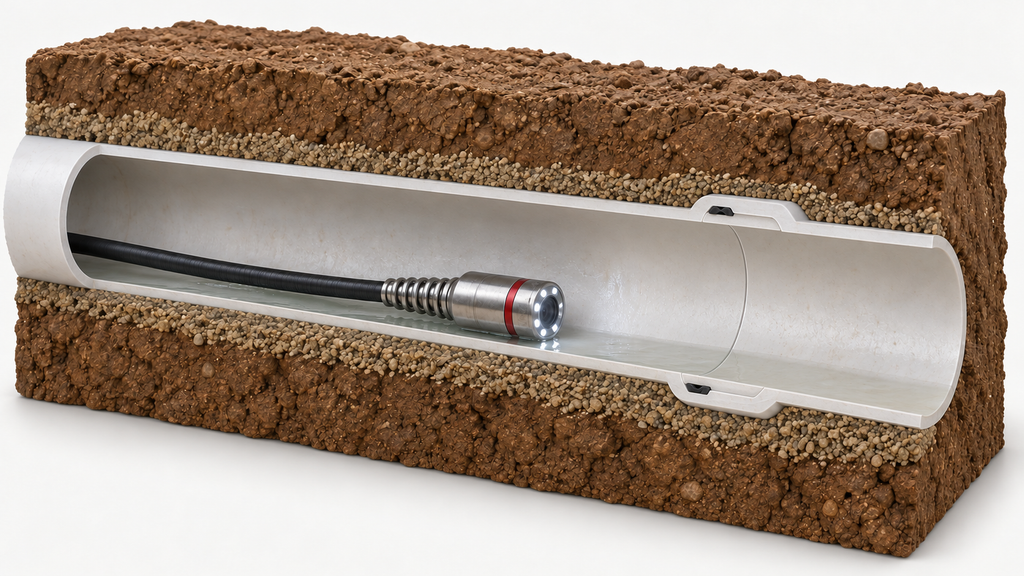
Ask for available footage, written findings, defect locations, and a clear statement of which sections were not inspected, including whether the camera reached the public sewer connection.
When Does a Hydrostatic Test Make Sense?
A drain-system hydrostatic test checks whether an isolated section of drain piping holds water under test conditions. A plumber may recommend it when a possible under-slab drain leak needs investigation. A sewer-camera view and a water-holding test answer different questions.
A falling water level warrants investigation, including checking the test setup. The test does not pinpoint the leak by itself, and a passing result applies only to the piping and conditions tested. Discuss the purpose, scope, and risks with the plumber first.
TREC says this testing requires a licensed plumber. Under the TREC resale contract, hydrostatic testing also requires separate written seller authorization. It is not a required part of the standard home inspection. Coordinate permission through your agent before booking it.
What Should You Ask About Previous Plumbing Repairs?
Ask what was repaired, who did the work, when it happened, whether it was permitted, and what paperwork comes with the house. A documented repair can be good news.
When a Seller’s Disclosure Notice is provided, compare its plumbing, sewer, water-damage, and repair information with the inspection report. The notice reflects the seller’s knowledge; it does not replace an inspection. Some transfers are exempt from the disclosure requirement.
Then ask, through your agent:
- What was repaired, and where? A spot repair under a slab is different from a reroute or a full line replacement.
- Who did the work, and was a permit pulled where one was required?
- Is there camera footage or a test result from after the repair?
- Is there a warranty, and does it transfer to a new owner?
- Was the plumbing checked after any foundation repair?
Hypothetical example: A seller says “the plumbing was replaced,” but the invoice covers only the hot and cold water-supply lines. That paperwork does not tell you whether the sewer line was replaced or evaluated. Ask which pipes the work covered and whether there are separate drain-inspection records before treating the plumbing as fully updated.
Does Every Home Need Every Plumbing Test?
No. Consider the report, accessible areas, repair records, pipe materials, and how much uncertainty remains.
Older drains or an unclear repair history can justify discussing a sewer camera even without current symptoms. Ask: “What question will this test answer, and what would we do with the result?” That helps you decide whether further evaluation is useful.
At Plumbing Dynamics, our technicians are not paid on commission, and repair pricing follows an onsite evaluation of the actual conditions. For a homebuyer, that means the inspection report and repair records are useful starting points for discussing the concern, relevant options, and what the work would involve.
“Very quick, helpful, and gave me multiple options for my repair.”- Caroline Johnston, Google review displayed on Plumbing Dynamics’ website. This review describes a repair experience. Read more customer reviews.
Your Plumbing Checklist Before the Inspection Deadline
- Confirm your inspection and option-period deadlines with your agent.
- Read the plumbing, water-heater, and gas sections, including limitations.
- Note visible pipe materials and any areas that were not inspected.
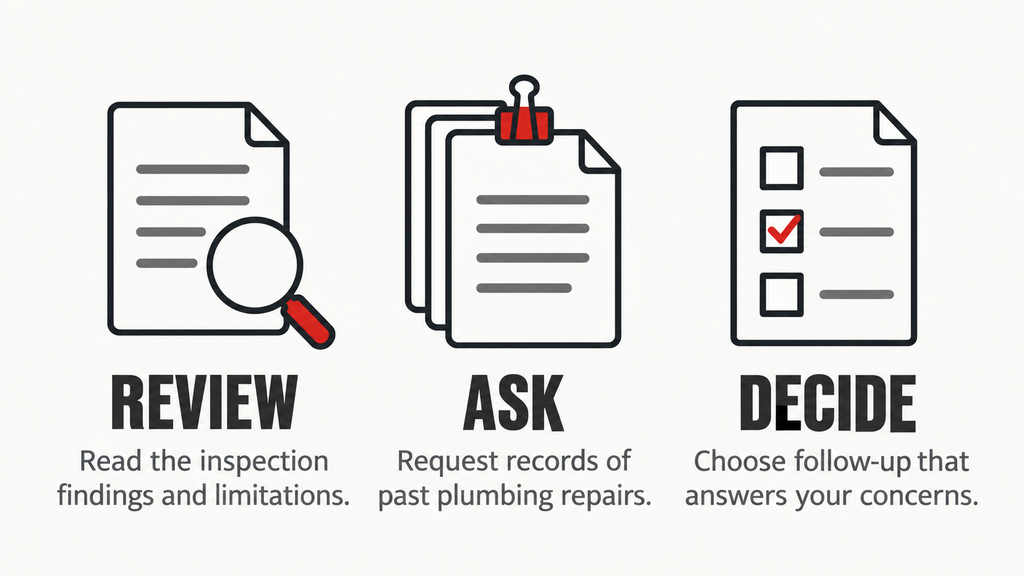
- Compare the report with the seller’s disclosures, where provided.
- Request records for past plumbing and foundation repairs.
- Arrange property access and any needed follow-up promptly.
- Get written seller authorization before any hydrostatic test.
- Ask for written findings and repair options with prices.
- Confirm whether any plumbing warranty transfers.
- Review repair requests or credits with your agent before the deadline.
Frequently Asked Questions
Does a Texas home inspection include a sewer camera inspection?
Not under TREC’s minimum requirements. Ask your inspector whether a sewer-camera service is included or available separately, and what it covers.
Can my home inspector perform a hydrostatic test?
A home-inspector license alone is not enough. TREC says a licensed plumber must perform hydrostatic testing. The TREC resale contract also requires separate written seller authorization.
Do I need a plumbing inspection when buying a newer home?
Not automatically. Base the decision on the inspection findings and unanswered questions, rather than the home’s age alone.
Is a sewer camera inspection worth it on an older North Dallas home?
It can be, especially when repair records are incomplete or drain problems recur. Ask what access is available and how the findings would inform your purchase decision.
What should I do if a plumber finds a problem before closing?
Ask for written findings, the areas inspected, and repair options with estimates. Review them with your agent before the relevant deadline so you can consider your next steps under the contract.
Final Thoughts
Before buying a North Dallas home, aim to understand which plumbing concerns need attention and what the next step would involve. Clear findings and repair estimates give you something concrete to discuss with your agent before the deadline.
Call Plumbing Dynamics at 214-929-3431 or request service from our North Dallas plumbing team to discuss a concern in your inspection report. Having these details ready will help make the conversation more useful:
What to Have Ready When You Call
- Property address and inspection deadline.
- Inspection report, including photos and stated limitations.
- Seller disclosures and available repair invoices.
- The specific concern you want investigated.
- The person coordinating access to the property.